- Slightly More Secure
- Posts
- Mental Resilience | Emotional Regulation
Mental Resilience | Emotional Regulation
An invitation to notice, inquire, and choose

Ian Gress
February 16, 2026
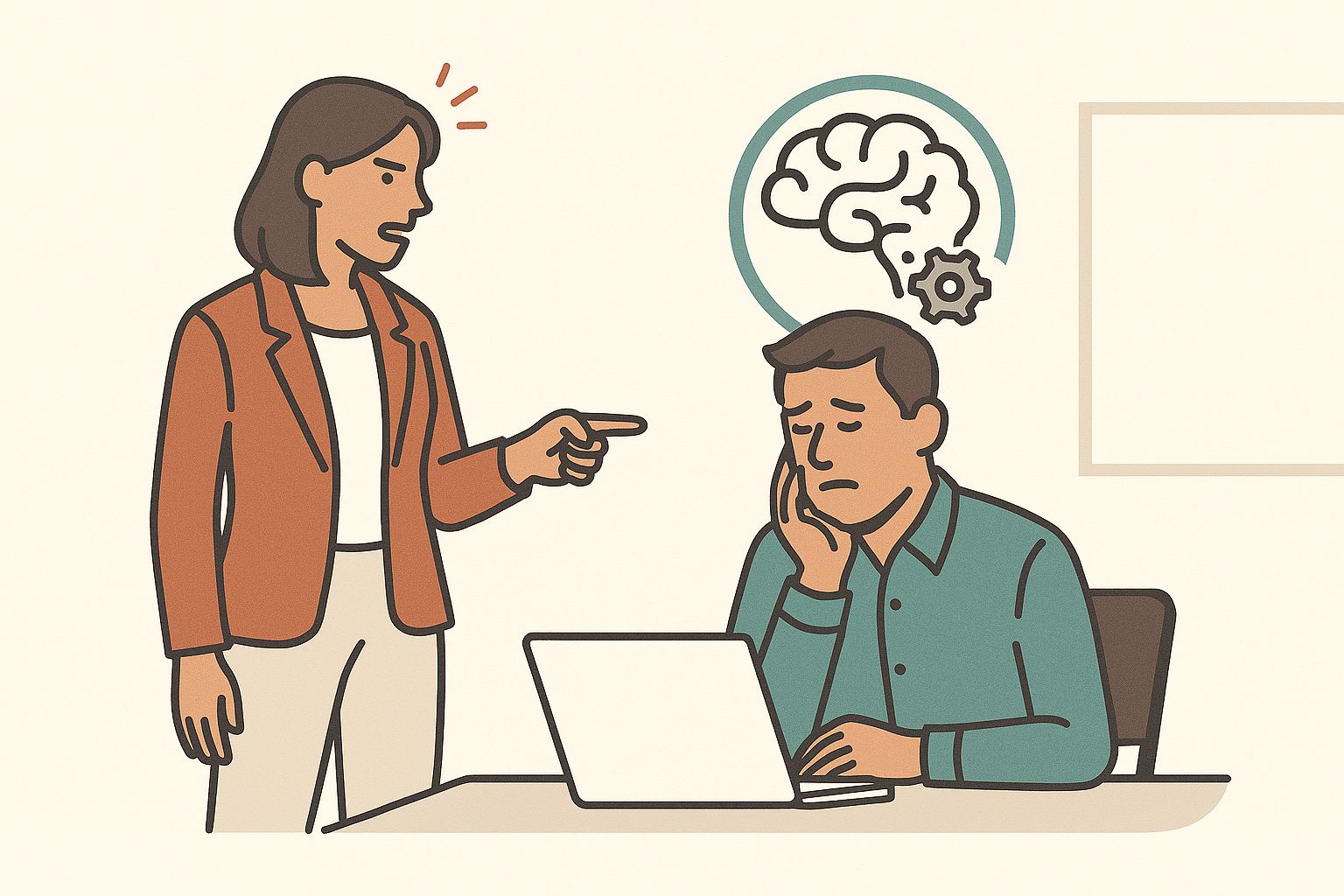
Think about the last time something small felt big. A sassy email or text. A client who was rude and disrespectful. A partner who missed a major handoff. You felt heat rise in your face. Your jaw got tight. Words lined up fast, ready to be fired at the potentially deserving target. In that moment you were not only reacting to the event. You were reacting to the meaning you assigned to it. That meaning arrived before you noticed it, wrapped in habits, history, and individual bias.
Emotional regulation is not about becoming unfeeling and emotionless. It is about getting curious sooner. It is the practice of asking better questions in the space between stimulus and response. You will not remove the physiologic changes. But you can learn to see it with enough clarity to choose your next move.
What are you actually feeling
Start with physiologic signals. You do not think your way into an emotion. It arrives as a signal (stress response). Tension, rushes, movement, heat, emptiness, pressure, etc.. Pick a recent moment that you remember having a response. Replay ten seconds of it. Where do you feel it. Neck, chest, stomach, hands, back? What is the simple label that fits? Anger, anxiety, embarrassment, shame, frustration, disappointment. The label is not a judgment. It is a handle that you can use as an aid to move to the next step of internal analysis.
You might notice that what you call anger is often fear wearing armor. Fear of losing face. Fear of losing control. Fear that your judgment will be exposed. This is not weakness. It is useful information. If you can name it, you can work with it.
The story underneath
Every emotion carries a story. The story tries to keep you safe, even when it makes you smaller. A client pushes back and your story is, “They do not respect me.” A teammate is late with a deliverable and the story is, “I cannot rely on anyone.” A stakeholder asks for more detail and the story is, “I am being judged and will be found wanting.”
Pause on one of your own stories. Where did it come from? Is it even accurate? How old is it? What has it helped you avoid? What has it cost you.
If you look closely, you may find that the story is doing two jobs. It explains the world and it protects your identity. That is why it feels non-negotiable (to you) in the moment.
Here is the pivot. You do not have to disprove the story to relax your grip on it. You only need to consider another one that is also plausible. Maybe the client is scared about their own reputation. Maybe the teammate is overwhelmed, not careless. Maybe the stakeholder is trying to align you with a political constraint you cannot see yet. When you hold two stories at once, your options multiply.
Two things can be true at the same time.
We all have biases
Internal biases shape which story you pick first. None of this makes you broken. It makes you human. Get familiar with the common bias types that we all have, at least to some extent.
Negativity bias makes threats louder than opportunities. It kept your ancestors alive. It also makes you over index on what could fail at the expense of what could work.
Confirmation bias makes your brain a prosecutor, not a judge. It hunts for data that proves what you already believe. When you feel strongly about something, watch how quickly you collect evidence that fits your first story.
Fundamental attribution error turns other people’s behavior into character, and your behavior into context. They missed a deadline because they are irresponsible. You missed a deadline because the scope shifted. See the asymmetry? When you do, gain back some humility.
Status and belonging bias are the quiet ones. A request that threatens your standing or your tribe can feel existential. That is why criticism from inside your circle stings more than criticism from a stranger.
Sunk cost bias whispers that stopping means failing. So you push harder on a shaky plan to avoid the pain of saying, I need to change course. In operations and security, this one is expensive.
The goal here is awareness to internal biases, not to eliminate them. You can name them in real time (with lots of practice). Try this simple move. When you feel the surge of emotion starting, ask yourself, “Which bias is leading right now.” Even that question can loosen its grip and allow you to think more objectively.
Using stress response to your advantage
Pressure (causing stress responses) compresses the way we perceive time. Your nervous system wants to move first and think later. That impulse is not the enemy. It is a tool. Given the right training, this can be incredibly useful.
When you feel the rush of emotion or a new stress response, try focusing on one item only (i.e., not a broad scope). Do not try to solve the whole incident or event. Decide what a good outcome looks like with a deliberate pause for ten minutes. Do not “win” the meeting or encounter, whatever it may be. Aim to understand one thing clearly and state it plainly.
Notice how your body sets tempo for your mind. A long exhale sends a message that you are not in immediate danger. A grounded posture gives your brain a steadier platform to work from. You do not need a ritual. You need one breath you notice. Sometimes that is enough.
The usefulness of anger, fear, and shame
Most of us file these as bad emotions. They are not. They are rough cut information.
Anger often points to a violated value. Maybe it is fairness. Maybe it is competence. Maybe it is respect. When you see the value, you can argue for it without burning the room down (even though it can temporarily feel satisfying).
Fear points to risk. Sometimes the risk is real. Sometimes it is reputational. Sometimes it is imagined. Ask yourself, “What is the actual risk here, and what evidence do I have.” You may discover your fear is a request for better preparation, not a sign to stop everything.
Shame is tricky. It says, “If they see this part of me, I am out.” It keeps you from testing ideas and asking for help. If you can turn shame into a specific mistake, you can fix the mistake. The move is, “I did X,” not, “I am X.”
A real-world example
You are on a client call. A senior stakeholder interrupts you, twice (after you’ve already addressed the issue politely). Heat rises. The story in your mind is an instant, “They do not respect me.” You feel your voice tighten. You want to match their force.
You catch one signal. Tight jaw. You press your feet to the floor. One quiet exhale that is a little longer than your inhale. You look at the screen like it is a real person and say, “I want to make sure I heard your concern… Here is my summary in one sentence… Did I miss anything?”
They slow down. You still feel the heat, but you are steering the ship. You are not less emotional. You are more deliberate about what the emotion is telling you and what it is not.
Questions to ask yourself this week
Use these as tools, not homework.
“What emotion do I feel?” (in one word) “Where do I feel it in my body?”
“What is the first story my brain offered me?” “What else could be true?”
“Which bias is leading right now?” Negativity, confirmation, attribution, status, sunk cost, etc.
“What would a good outcome look like ten minutes from now?”
“What small action moves me toward that outcome without making things worse?”
“What did I learn about myself in this moment that I want to remember next time?”
Answering any one of these buys you time. Time is judgment.
For leaders
Your team will regulate if you model it yourself. You do not have to be perfect. You do have to be visible.
You can say, “I am feeling rushed, I want to slow this down for one minute, so we get it right.”
You can normalize curiosity over certainty. You can praise the process, not just the win. You can write one sentence in a playbook that says, “In the first sixty seconds, summarize the problem out loud and ask for the most important constraint.” That sentence helps the next person hold a better story under pressure.
Last note
There is nothing mystical here. Emotions are data. Biases are lenses for our internal perspective. Stories are the choices we make. The skill here is not to eliminate any of them. The skill is to notice them soon enough to choose your next step purposefully.
Pick one moment when you feel the on edge. Name the emotion, notice one body signal, and ask yourself, “What else could be true?” Then choose one small action you will not regret.
If you want to share what you tried and what changed, reply. I read every note.
Stay safe out there.

Need security but don’t have a budget for dedicated staff?
Our Security Mentor Service offers personalized guidance, expert insights, and individualized sessions to build your security internally. Reducing risk and saving money on contractors and managed services by empowering you or your staff.
Start today and unlock potential, boost security, and provide value to your team!